Where dense tropical rainforest meets sprawling tea plantations, we encountered the captivating world of Rwanda's colobus monkeys. Our day began with a Wildlife Conservation Society meeting before venturing into Nyungwe forest, guided by the knowledgeable Claver and his team of trackers.
Nyungwe revealed itself as the most impenetrable forest we'd encountered yet. We watched in awe as our tracker skillfully wielded his machete, clearing a path through thick lianas and vines. The forest floor was a complex tapestry of mulch, understory vegetation, and intertwining shrubs.
The trek tested our endurance as we scaled steep inclines, each step requiring careful consideration. I found myself grateful for my yoga practice as I drove my walking stick deep into the ground for stability. While my fellow travelers slipped and tumbled around me, I managed to stay upright – though none of us escaped the forest's muddy embrace.
After nearly four hours of challenging terrain, our persistence was rewarded with an extraordinary encounter. The colobus monkeys, far from being shy, displayed an almost mutual curiosity. They approached within ten feet, sometimes closer, their comfort around humans a testament to the patient work of local trackers.

Perhaps most fascinating was the harmonious relationship between the monkeys and local tea pickers. The tea plantations serve an ingenious dual purpose: they create a natural buffer between forest and community while driving Rwanda's export economy. Unlike crops such as potatoes, which often spark human-wildlife conflicts, tea leaves hold no appeal for the forest's inhabitants. The colobus monkeys freely traverse these plantations, using them as bridges between forest fragments.
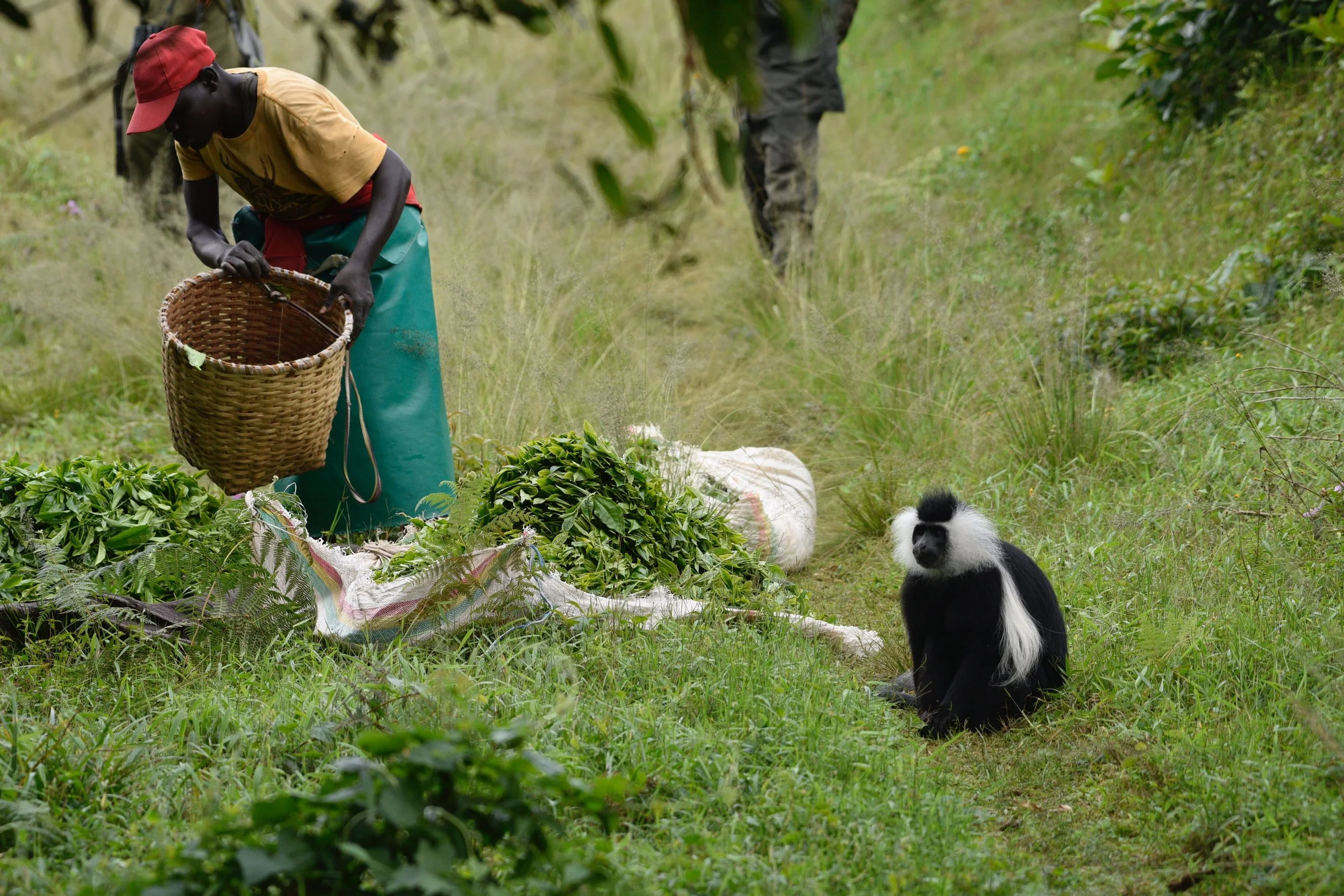
Colobus monkey siting by the forest edge and watching Rwandese tea picker.
Isaac Merson, 2022
This successful integration of conservation, community, and commerce showcases Rwanda's innovative approach to environmental stewardship. It's particularly inspiring to see these initiatives not only led but championed by Rwandans themselves, offering a compelling model for sustainable conservation across Africa.