Deep in Rwanda's Chamudongo rainforest, I find myself navigating muddy trails in pursuit of habituated chimpanzees. My boots, caked with more mud than I'd ever seen, carried me through steep hillsides as I dodged hanging vines and fought to maintain my footing. The challenging terrain and brisk pace kept my mind sharp and focused – a welcome distraction from recent heartache.
The experience took an exhilarating turn when a chimp charged past me, screaming at its companion merely two meters away. These fascinating creatures spent their days in a rhythm that seemed almost enviably simple: communicating loudly, eating abundantly, occasionally squabbling, and taking leisurely naps. Their only interruption? The presence of curious humans like myself, observing their daily routines.
The dedication of the local trackers was remarkable. Working in shifts from 5:30 AM until 6 PM, they maintained a constant vigil over the chimp community. As a Zambian, it was particularly inspiring to witness fellow African conservationists pursuing their passion with such expertise and commitment. Their work sparked visions of similar conservation success stories taking root in my homeland. As Jane Goodall once said, "What you do makes a difference, and you have to decide what kind of difference you want to make." Watching these trackers, I saw firsthand the profound difference dedicated individuals can make in wildlife conservation.
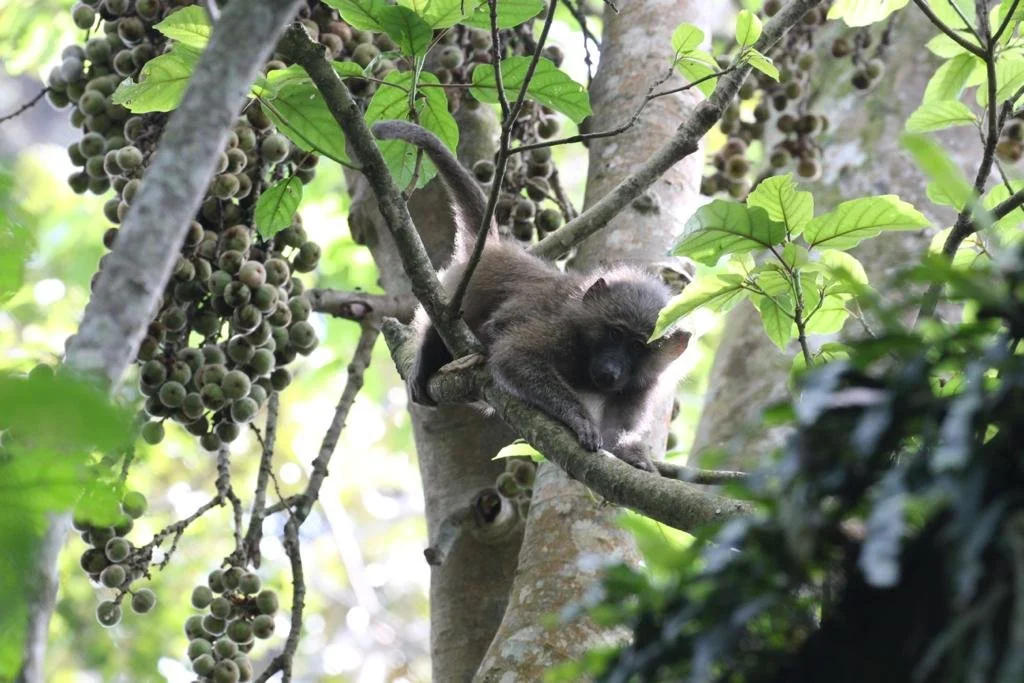
Isaac Merson, 2022
While the chimps were the intended highlight, it was the baboons that truly captured my attention. We encountered a large troop feeding on figs, with endearing infants playing among them. Several baboons made direct eye contact – a powerful moment of connection. Unlike their more defensive counterparts in Zambia, these Rwandan baboons showed no aggression toward humans, perhaps a testament to feeling secure in their environment.